Founder & Chief Product Officer
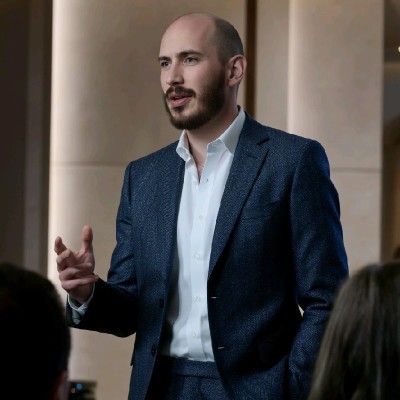
Andrew Crossley
Founded Wocal, a SaaS platform for venues, and grew it from concept to more than 300 venues and a £2.7M pre-money valuation. Now building Co-Ride, a community carpooling platform, at pre-seed.
The Wocal story
I founded Wocal in 2020 to solve a problem I kept seeing from the outside: venues had no good, simple way to manage the software side of running their space, and were stitching together tools that weren't built for them. I built the first version myself, took it to real venue owners, and adjusted it based on what they actually used rather than what they said they wanted in the pitch.
Over the following years the business grew to more than 300 active venues. That growth came from founder-led sales as much as product work — demos, discovery calls and renewals I ran myself, because at that stage of the company there wasn't anyone else to run them. As the venue base grew, so did the pressure to keep the product coherent rather than letting it sprawl into every feature a single venue asked for.
By 2024–2025 Wocal had reached a £2.7M pre-money valuation, reflecting the base it had built and the trajectory it was on. The business wound down in 2025. I don't dress that up: building something to that point and then closing it taught me at least as much as the growth did, particularly about how differently a founder experiences a downturn compared with an employee, and how much of the job is making calls with incomplete information and living with them.
The Wocal Journey
Now: Co-Ride
Since November 2025 I've been building Co-Ride, a community carpooling platform, as Founder & CPO. It's at pre-seed: the current work is discovery and validation rather than scale — understanding where a local carpooling network can actually reach the trust and liquidity it needs on both the driver and rider side before we commit to building more than the market has proven it wants.
A lot of what I learned at Wocal transfers directly: keep the early product small, get in front of real users constantly, and don't mistake enthusiasm in a conversation for evidence of behaviour. Some of it doesn't transfer at all, and figuring out which is which is a large part of the job right now.
Founder Capabilities
Product Vision
Set the direction for a venue SaaS platform from concept through to a 300+ venue base
Revenue Engine
Built the pricing model, cash flow view and investor-facing numbers behind the pre-money round
Building With AI Tools
Use Claude, Cursor, Lovable and Bolt to move from idea to working product without a large team
Growth & Partnerships
Negotiated and grew a base of venue partners from nothing to 300+ accounts
Market Analysis
Identify underserved segments and validate them quickly before committing build time
Founder-Led Sales
Ran demos, discovery calls and negotiations directly, without a sales team standing between me and the customer
Entrepreneurial Skills
Founder toolkit
I build AI-first, which changes what a solo or small founding team can realistically ship. I use Claude and Cursor for the harder engineering and product-logic work, and Lovable and Bolt to move quickly from an idea to a clickable or working product that real users can react to. That stack shortens the distance between a hypothesis and a test of it, which matters most in discovery and validation — deciding what to build before spending months building the wrong thing, pricing it against what a customer will actually pay rather than what a spreadsheet says they should, and getting a first version in front of real users as part of go-to-market rather than after it.
What I do differently as a founder-operator
- I sell before I build. Years of enterprise sales at Just Eat and Sage taught me to test whether someone will actually say yes before assuming a feature is worth the engineering time.
- I know the difference between the buyer, the user and the payer. Sage made that distinction unavoidable, and it shapes how I price and pitch Co-Ride now.
- I treat support and objections as product research. Echo-U showed me how much signal sits in a queue of complaints that never reaches a roadmap.
- I hold a product's shape under pressure. Every venue at Wocal wanted a different feature; the discipline was saying no to most of them.
- I own the commercial outcome, not just the product. As a founder there's no separate sales or ops function to hand a problem to — the product decision and the commercial one are the same decision.
Prior Commercial Experience
Enterprise / Partner Sales
Just Eat · 2021-2025
Marketplace and enterprise partner sales
Account Manager
Sage · SaaS
Enterprise SaaS sales, churn and renewal
BDM
Echo-U · Contact centre
Customer service and pipeline ownership
What I'm looking for next
I'm building Co-Ride, and I'm open to conversations with people who've built or backed marketplace and community platforms before, or who are tackling a similar kind of two-sided liquidity problem. If that's you, get in touch.